Irreplaceable – an ephemeral art exhibition

In May of 2023, Flamingo Gardens had the pleasure of hosting artist Sharon Lee Hart for a photo shoot of some of our rehabilitated animals, particularly those species that are endangered or at-risk.

Sharon Lee Hart is a South Florida-based artist currently exploring ecology, ephemerality, and time through experimental and cameraless photography. While maintaining an active studio practice, Hart serves as an Associate Professor of Art at Florida Atlantic University. With an environmental focus, she has also served as an artist-in-residence at Joshua Tree National Park (Joshua Tree, CA), The Hambidge Center for Creative Arts & Sciences (Rabun Gap, GA), and The Studios of Key West (Key West, FL). Hart received the 2023 SECAC Artist’s Fellowship Award. Her work is in several permanent collections including the King County Public Art Collection (Seattle, WA) and The Nelson-Atkins Museum of Art (Kansas City, Missouri), and has been featured in solo and group exhibitions, both in the U.S. and internationally.

Hart’s current project, Irreplaceable features anthotype portraits of at-risk and endangered flora and fauna native to Florida. An anthotype (from the Greek anthos “flower” and typos “imprint”) is an image created using photosensitive material from plants under the influence of light from the sun. In the case of Hart’s work, the anthotypes are made by crushing plants (leaves, petals, etc.) and mixing them with a bit of alcohol or water to make a liquid which is then painted on paper. After several coats and once dry, a photographic transparency is placed on top of the coated paper and then it bakes in the sun. Anthotypes are ephemeral – they will eventually fade – much like the subjects of the prints will eventually disappear from the planet.

In Florida Panther, the face of a panther emerges from an atmospheric burnt orange haze. The monochromatic effect, wrought from turmeric-coated paper, gives it a ghostly appearance. This critically imperiled big cat seems to gaze at us, perhaps aware that only 200 of its kind remain in the wild. Other plants, mostly foraged from her yard and kitchen, yield similar colorfield washes. These include red dragon fruit, petunia, chard, beetroot, blackberry, spinach, turmeric, butterfly pea flowers, among others. The properties of the plant pigments determine each print’s eventual color and dictate its required sun exposure duration, influenced by the season and weather. Consequently, exposure times for individual anthotypes range from hours to months.

The subjects of the Irreplaceable portraits are initially photographed within their natural habitats and at local conservation organizations*. Subjects range from a deep red morning glory found exclusively in the pine rocklands of Miami-Dade County (Man in the Ground/ Ipomoea microdactyla) to the Loggerhead Sea Turtle (Caretta caretta), threatened by habitat loss and incidental capture by commercial fisheries. Reviving a nontoxic 19th-century technique pioneered by the Scottish scientist Mary Somerville, the contemplative anthotype process now merges historical and contemporary photographic methods to underscore a sense of time that is both circular and finite. Inviting viewers to contemplate their beauty and precarity, the images serve as a reminder that some of these anthotypes could outlast the plants and animals they enshrine without further conservation efforts. Above all, Irreplaceable urges us to protect these vital life forms while we can and reminds us that the ecological systems they sustain—and are sustained by—include human beings.

Installation views of Sharon Lee Hart's Irreplaceable at The Frank C. Ortis Art Gallery, 2024. Photography by Zachary Balber.

Irreplaceable, along with Sharon Lee Hart’s other project Dark Tracing, can be viewed now as part of a group exhibition titled Ephemeral Construct on display at the Frank C. Ortis Art Gallery and Exhibit Hall in Pembroke Pines.

Ephemeral Construct: Four Solos

February 8 – May 18, 2024

The Frank, located at the Charles F. Dodge City Center

601 City Center Way

Pembroke Pines, FL 33025

www.thefrankgallery.org/p/exhibitions/now-on-exhibition

https://sharonleehart.com/section/526570-Irreplaceable%20%28Ongoing%29.html


Flamingo Gardens, Busch Wildlife Sanctuary, Fairchild Botanical Gardens, and Loggerhead Marinelife Center

Animal Care Supplies Needed

In the heart of our community lies a haven for wildlife – Flamingo Gardens, a sanctuary dedicated to the care and conservation of animals. Today, we bring your attention to an urgent matter that calls for the compassion and generosity of our community. The Flamingo Gardens Animal Care Department is facing a shortage of essential supplies needed to ensure the well-being of the diverse range of creatures under their protection.

The Animal Care Department is reaching out to our community for support. Your assistance can make a significant difference in the lives of these animals. Supplies can be dropped off at Guest Services between the hours of 9:30 AM and 4:00 PM, Daily. Here’s a list of urgently needed items:

Every contribution, big or small, plays a vital role in ensuring the Flamingo Gardens Animal Care Department can continue its crucial mission. By providing these supplies, you’re directly contributing to the comfort, health, and safety of the animals in our community.

Our community has always demonstrated a remarkable spirit of generosity and empathy. Now, more than ever, the Flamingo Gardens Animal Care Department needs our support. Let’s come together to ensure these beautiful creatures continue to receive the care and attention they deserve. Your kindness will not only make a difference in their lives but will also reaffirm the strength of our community’s commitment to the well-being of all its inhabitants, big and small.

The Truth About Bats

They’re often misunderstood to be blind, squeaky creatures who suck blood and get tangled in your hair, but bats are an important species. They impact our lives in ways we often don’t appreciate, like eating mosquitoes, pollinating our favorite fruits, and more!

Bats have been on Earth for more than 50 million years. With over 1,400 species, they are the second largest order of mammals, and are widely dispersed across six continents.

Next time you see a bat in your yard, consider these ways in which they enrich our lives!

The Grey-headed Flying Fox (Pteropus poliocephalus) is a large bat native to Australia which helps pollinate fruit.

Without bats, we could say goodbye to avocados, mangoes, bananas and more! Most flowering plants cannot produce seeds and fruit without pollination. This process also improves the genetic diversity of plants. From deserts to rainforests, bats that drink the sweet nectar inside flowers pick up a dusting of pollen and move it along to other flowers as they feed. Over 300 species of fruit depend on bats for pollination. Bats spread seeds, including those of the cacao plant. So, without bats, our chocolate supply would be greatly reduced!

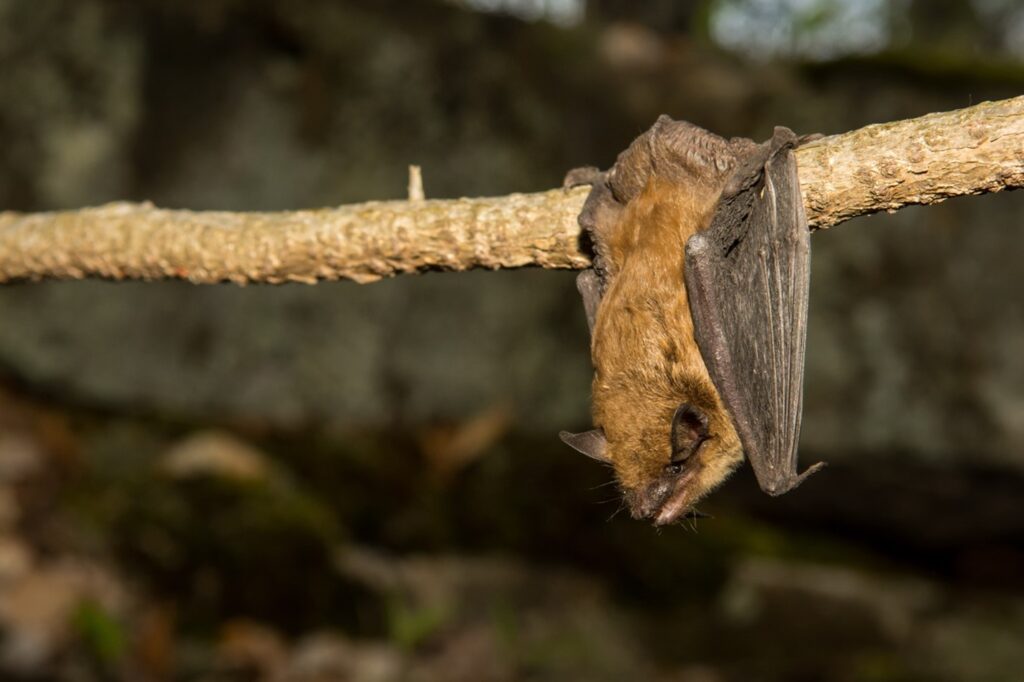
Florida’s Big Brown Bat (Eptesicus fuscus) feeds on beetles, flies, mosquitoes, flying ants, flying termites, many other insects.

Bats can eat their body weight in insects EACH NIGHT. Farmers have bats to thank for helping to protect their crops from insects. By eating insects, bats save U.S. agriculture billions of dollars each year in pest control. Some studies have estimated that service to be worth as much as 53 billion dollars annually.* That doesn’t even take into account the volume of insects eaten in forests and how that impacts the lumber industry, nor the importance of bats as crop pollinators.

An extract from the saliva of the Common Vampire Bat (Desmodus rotundus) is used for medicine.

Bats inspire medical innovations. About 80 medicines come from plants that rely on bats for pollination. Doctors have studied bat echolocation and used it to develop navigational aids for the blind. Bat research has also led to advances in vaccines for humans. Scientists have extracted a compound from vampire bat saliva and turned it into medicine (aptly named Draculin). Studies have found this anticoagulant drug to be very useful for stroke patients. Scientists are also studying bats’ resistance to DNA damage and malaria parasites in hopes of learning more about human DNA damage and how to better deal with malaria.

Bat guano (excrement) is rich in nitrogen, phosphorus, and potassium and is used to fertilize lawns and gardens. Nitrogen promotes rapid, green growth, and phosphorus promotes root growth and supports flowering, while potassium helps plants grow strong stems.

Interested in learning more about bats? Check out the traveling exhibit “Masters of the Night: The True Story of Bats” in the Gallery now through January 28th. Learn about how gentle bats really are, and their many benefits to the environment through lifelike models, multisensory interactive displays, and environmentally realistic settings.

(Information courtesy of the Bureau of Land Management, U.S. Department of the Interior, and the National Wildlife Federation)

*https://www.usgs.gov/faqs/why-are-bats-important

Eco-teers – Tree Tops Park Invasive Species Removal

EcoTeers had their third project of the month! They participated in an invasive species removal where we dug up snake plants and removed them from Tree Tops Park. During this project they managed to remove 400.1 pounds of Dracaena Trifasciata (snake plants) by the roots in under three hours. These plants were double bagged into 5 separate garbage bags and disposed of away from the park. 

Special Sunday Yoga

Special Raw Essences Flow (Yoga and Aromatherapy)

Join us Sunday, May 28th at 8:30 AM for a special Raw Essences Flow with Cintia Wess. Reset your body, mind, and soul with a combination of yoga and aromatherapy that will help keep you in harmony with nature.

“Feel Good” Flow with Sarah Freemyer will return on Sunday, June 4th

The Need For Pollinators

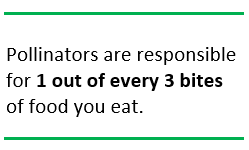
Butterflies have long been admired for their beauty and grace, but often fail to receive the appreciation they so earnestly deserve for their role in plant pollination. Pollinators, such as bees, bats, hummingbirds, and butterflies, are responsible for one out of every three bites of food you eat! Unfortunately, many pollinator populations are at risk. Decades of stressors, including loss of habitats, improper use of pesticides and herbicides, disease, predation, and even rising temperatures due to climate change, have all hurt pollinator populations.

An estimated 87.5% of all flowering plants on the earth need help with pollination—they need pollinators. Pollinators provide pollination to over 180,000 different plant species and more than 1,200 crops. Without pollination, most crops would simply fail to bear fruit and eventually become extinct—as would the animals that rely on them for sustenance.

Pollinators are vital economically, adding $217 billion dollars to the global economy. In the United States, honeybees alone are responsible for between $1.2 and $5.4 billion dollars in agricultural productivity. Pollinators support healthy ecosystems that clean the air, stabilize soils, protect from severe weather, and support other wildlife.

Tragically, a host of environmental imbalances are decimating many Florida pollinator populations. For example, Florida monarch butterfly populations have dropped an alarming 80% since 2005!

The monarch butterfly has recently been added to the endangered species list by the International Union for Conservation of Nature. U.S. Fish and Wildlife Service placed the imperiled butterfly on the waiting list for the Endangered Species Act protections and will propose listing it in 2024.

Researchers believe that shrinking populations of native milkweed (the monarch’s host plant), due in part to a boost in the use of the herbicide glyphosate (lethal to milkweed), is responsible for its population decline. Less milkweed means less habitat, and less habitat means less monarch butterflies, an essential food source for birds and mice. These chain effects inevitably undermine the entire ecosystem.

Bees are facing the danger of a phenomenon called colony collapse disorder (CCD). A paper from Oregon State University explains CCD: “CCD most likely stems from a combination of problems associated with agricultural beekeeping, including pathogens, nutritional deficiencies and lack of a varied diet, exposure to neonicotinoid insecticides and other pesticides, lack of genetic diversity, habitat loss, and transportation stress. Pesticides, stress, and lack of diversity can actually exacerbate the vulnerability of bees to pathogens.”


Four species of hummingbirds in North America are at risk because of the rising temperatures due to climate change: Allen’s Hummingbird, Black-chinned Hummingbird, Calliope Hummingbird, and Rufous Hummingbird.

The increasing warmer temperatures are forcing these four species to abandon their native areas for cooler and more stable environments. Intense heat is incredibly dangerous for hummingbirds as it forces them to find shade to cool off rather than feed on nectar, which can result in starvation since their high metabolism demands that they constantly need to eat.

Bats are another species of a pollinator affected by rising temperatures. The warmer weather impacts their hibernation cycles and their prey availability, which directly affect how successfully a mother bat can give birth and raise her young. According to a National Geographic article, climate change is also impacting their ultrasonic hearing:

“Bats living in temperate zones were more likely to lose prey detection volume, while in tropic zones, many bat species will actually be able to detect more prey. Bats calling at lower pitches generally gained prey detection space” because humidity and temperature directly impact how effectively bats can detect their prey.

MEETING THE NEED

Protecting pollinators requires both conservation and education. That’s why Flamingo Gardens is partnering with the Smithsonian to bring their traveling exhibit, “Pollination Investigation,” to the Gardens to help educate visitors about pollinators. That’s also why we have established the bee sanctuary so that honeybees may be safely relocated rather than destroyed, and opening the new Butterfly Conservatory so that we may rear native butterflies to help re-establish local populations.

Educating individuals about pollinator life cycles, migration patterns, and ecological roles cultivates an appreciation for these animals and encourages people of all walks of life to invest in and protect native butterfly and pollinator habitats, promoting their survival and ensuring their crucial role in the ecosystem continues.

HOW YOU CAN HELP POLLINATORS
  • Plant a variety of pollinator friendly flowers and plants that are native to your climate.
  • Stop or limit the use of pesticides on your property – pesticides are toxic to pollinators.
  • Create a habitat that is friendly to bees. This means either placing beehives on your property, leaving dead logs around that bees can nest in, and simply ensuring bees have plenty of bee-friendly plants to feed from in your yard.
  • Provide nectar for hummingbirds on your property. You can do this by buying a feeder for hummingbirds and filling it with sugar water.
  • Place a bat house on your property. This will provide bats a safe place to sleep during the day.
  • Plant milkweed plants. Monarch butterflies lay their eggs on the leaves and feed on the nectar of the flowers.

March of Museums

Florida Secretary of State Announces Sixth Annual “March of Museums”

Flamingo Gardens has partnered with Florida Department of State on statewide initiative.

TALLAHASSEE – Florida Secretary of State Laurel M. Lee and the Florida Department of State announced the fifth annual “March of Museums” celebrating the variety and versatility of museums in Florida and the important services those museums provide to their communities. The initiative includes partner museums and cultural institutions throughout Florida that showcase the vast and diverse array of museums that populate the Sunshine State.

As Florida’s Chief Cultural Officer, I’m proud highlight the important role that museums play in preserving Florida’s history and resources”, said Florida Secretary of State Laurel M. Lee. “With institutions focused on history, art, nature, and more, the diversity of participants in March of Museums illustrates the many aspects of Florida’s unique cultural landscape.”

The department is hosting MarchofMuseums.com, which offers a listing and map of museums by region, including Flamingo Gardens and other statewide partner museums. The website also highlights the mission, collections, and/or events of each institution during the month of March. The department encourages visitors and Floridians to take advantage of March of Museums initiative to spend some time at one of their favorite museums, or to discover a new museum, and to share their pictures on social media using #MarchOfMuseums. 

Genevieve Marcello, Director of Special Programs for Flamingo Gardens said, “March of Museums is an exciting opportunity to experience museums in our community. Be sure to check out our exciting March exhibits “Pollinator Investigation” and “Portrait of a Pollinator”.

Flamingo Gardens has partnered with the Florida Department of State to encourage Floridians and visitors to Florida to experience the many ways that museums serve the community. Visit MarchOfMuseums.com for more information.

Access Program for Low-Income Families

Flamingo Gardens Announces Access Program for Low-Income Families Museums for All to increase accessibility of high-quality museum learning resources!

Today Flamingo Gardens announced that it has joined Museums for All, a signature access program of the Institute of Museum and Library Services (IMLS), administered by the Association of Children’s Museums (ACM), to encourage people of all backgrounds to visit museums regularly and build lifelong museum-going habits. The program supports those receiving food assistance (SNAP) benefits visiting Flamingo Gardens for a minimal fee of $3 per person (Adults and Children), up to four people, with the presentation of a SNAP Electronic Benefits Transfer (EBT) card. Similar free and reduced admission is available to eligible members of the public at more than 850 museums across the country. Museums for All is part of the Flamingo Gardens’ broad commitment to seek, include, and welcome all audiences.

 Museums for All helps expand access to museums and also raise public awareness about how museums in the U.S. are reaching their entire communities. More than 850 institutions participate in the initiative, including art museums, children’s museums, science centers, botanical gardens, zoos, history museums, and more. Participating museums are located nationwide, representing all 50 states, the District of Columbia, and U.S. Virgin Islands.

About the Institute of Museum and Library Services (IMLS) 

The Institute of Museum and Library Services is the primary source of federal support for the nation’s 123,000 libraries and 35,000 museums. Our mission is to inspire libraries and museums to advance innovation, lifelong learning, and cultural and civic engagement. Our grant making, policy development, and research help libraries and museums deliver valuable services that make it possible for communities and individuals to thrive. To learn more, visit www.imls.gov and follow us on Facebook and Twitter. 

About Association of Children’s Museums (ACM) 

The Association of Children’s Museums (ACM) champions children’s museums worldwide. With more than 460 members in 50 states and 16 countries, ACM leverages the collective knowledge of children’s museums through convening, sharing, and dissemination. Learn more at www.childrensmuseums.org.

The Climate Crisis 2022: Part 2- Climate Change Impacts

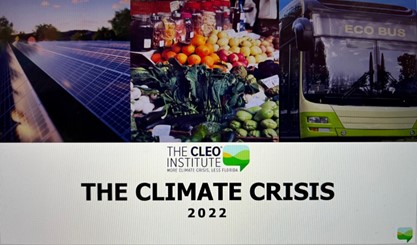
Last month, Flamingo Garden’s Eco-teer Tiffany Engel discussed The Greenhouse Gas Effect in Part 1 of the “Climate Change 101” as presented by the Eco-teers as part of their November 2022 Climate Fair. This month Eco-teer Ines Rosales discusses Climate Change Impacts affecting the world and Florida specifically.

Earth’s global average surface temperature in 2020 tied with 2016 as the warmest year on record, according to an analysis by NASA.

NASA uses the unique vantage point of space to better understand Earth as an interconnected system. The agency also uses airborne and ground-based measurements and develops new ways to observe and study Earth with long-term data records and computer analysis tools to better see how our planet is changing.

Continuing the planet’s long-term warming trend, the year’s globally averaged temperature was 1.84 degrees Fahrenheit (1.02 degrees Celsius) warmer than the baseline 1951-1980 mean, according to scientists at NASA’s Goddard Institute for Space Studies (GISS) in New York. 2020 edged out 2016 by a very small amount, within the margin of error of the analysis, making the years effectively tied for the warmest year on record.

According to independent analyses by NASA and the National Oceanic and Atmospheric Administration (NOAA), Earth’s global surface temperatures in 2019 were the second warmest since modern recordkeeping began in 1880.

Globally, 2019 temperatures were second only to those of 2016 (now tied with 2020) and continued the planet’s long-term warming trend: the past six years have been the warmest of the last 140 years.

Using climate models and statistical analysis of global temperature data, scientists have concluded that this increase mostly has been driven by increased emissions into the atmosphere of carbon dioxide and other greenhouse gases produced by human activities.

Rising temperatures in the atmosphere and ocean are contributing to the continued mass loss from Greenland and Antarctica and to increases in some extreme events, such as heat waves, wildfires, intense precipitation.

NASA shares this knowledge with the global community and works with institutions in the United States and around the world that contribute to understanding and protecting our home planet. You can see the NASA video Global Warming from 1880 to 2020 at: https://climate.nasa.gov/climate_resources/139/video-global-warming-from-1880-to-2020/

Ice serves like the Earth’s natural air conditioning system. Large land-based ice formations naturally retreat each summer, but unusually warm temperatures have led to greater-than-average melting.

The Arctic Ocean is expected to become essentially ice free in summer before mid-century.

There is a difference between land ice and sea ice melting. The two main impacts of ice melt is:

  • Land ice includes ice sheets and glaciers. When it melts, it eventually finds its way into the nearest body of water because of gravity. Therefore, land ice melting directly adds to the volume of water in the ocean, increasing sea level. ( Land ice melting causes sea level rise)
  • Sea ice includes frozen seawater and icebergs. When it melts, it does not directly add to sea level rise because it’s already in the sea. (the volume is already accounted for) BUT it exposes more dark ocean, allowing the ocean surface to absorb more heat, and further encourage the melting of ice. (This is a positive feedback loop: an initial effect causes a secondary effect that perpetuates the initial effect.)

SOURCE:

https://climate.nasa.gov/effects/

https://svs.gsfc.nasa.gov/4435

The past decade has seen unprecedented glacier retreat. Observations from 11 satellite missions monitoring the Greenland and Antarctic ice sheets have revealed that the regions are losing ice six times faster than they were in the 1990s. This video shows how, in the past 10 years, this glacier has retreated more than it had in the previous 100 years. You can see the video at: https://www.nasa.gov/feature/jpl/greenland-antarctica-melting-six-times-faster-than-in-the-1990s

threat of intense storms and the increasing threats of sea level rise, ocean chemistry, heatwaves, and water deficit.

* Jenny Staletovich, “Florida Leads Nation in Property at Risk from Climate Change,” Miami Herald, July 27, 2015. http://www.miamiherald.com/news/local/environment/article29029159.html

Hurricanes are expected to become larger and stronger, with more rainfall and larger storm surges, moving slower, and with rapid intensification. The criterion for rapid intensification is an increase in wind speeds of 35mph in 24 hours. Hurricane Ian jumped 35mph in just 4 hours!

In South Florida, we can expect at least 2 feet of sea level rise by 2050. Even more, by 2100, a rise of as much or more than 8 to 10 feet cannot be rules out.

The coastline of the United States is highly populated.  Approximately 25 million people live in an area vulnerable to coastal flooding. Coastal and ocean activities, such as marine transportation of goods, offshore energy drilling, resource extraction, fish cultivation, recreation, and tourism are integral to the nation’s economy, generating 58% of the national gross domestic product (GDP).

Coastal areas are also home to species and habitats that provide many benefits to society and natural ecosystems.

In South Florida drinking water is already experiencing saltwater intrusion.

Biscayne Bay Aquifer is the only source of drinking water for about 3 million people in Miami and Dade County. The highly permeable limestone provides fresh drinking water. but also allows easy saltwater intrusion. Rising sea levels cause saltwater to “intrude” further landward into the freshwater Biscayne Aquifer, increasing the vulnerability of the region’s drinking water to saltwater intrusion. 

Additionally, rising sea levels push salt water further into the Everglades, potentially causing loss of wetland plants and habitat. With saltwater intrusion, Miami’s drinking water will be more expensive and will impact marginalized communities disproportionately

About the Author: Ines Rosales is a Senior at ­­­­Cypress Bay High School and volunteer member of Flamingo Gardens’ Eco-teers. Her blog The Climate Change Impacts is Part 2 of the “Climate Change 101” presentation by the Eco-teers as part of their November 2022 Climate Fair. Look for Part 3, Climate Change Impacts to Marginalized Communities, to follow next month.