90th Anniversary Celebration


2017 is the
90th Anniversary of Flamingo Groves, the forerunner of Flamingo Gardens. The
founders, Floyd L. and Jane Wray, moved to Florida in 1925.  They were thrilled with their new home and the beauty of South Florida.  He had a good job selling property in Hollywood-by-the-Sea.
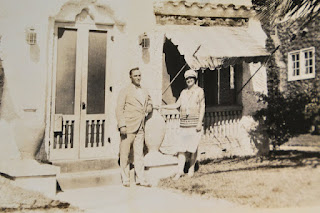
Then came 1926.  It was not a good year for South Florida or the Wrays. The real estate boom was
ending, and on September 19, a devastating
hurricane made landfall.

1926 HurricaneYou can only
imagine how the Wrays felt after the storm subsided.  They were grateful they fared the storm better than most. But, with the real estate business
gone, Floyd knew he had to pick himself up and consider his options. He decided
on a venture that would take him in a whole new direction —
citrus. He believed he could make a go of it if he bought inexpensive land in the drained Everglades and grew a new
variety of summer oranges, and he was right.
By the end of 1926, the new plan was in motion. Mittie Meyers Chaplin writing about
her pioneer family noted they
sold three hundred and twenty acres of Everglade land six miles west of Davie and
somewhat higher than sea level than elsewhere to a young man. That
young man was Floyd L. Wray.
Citrus IndustryFlamingo
Groves was incorporated on January 2, 1927. The first bare-root Lu Gim Gong summer-ripening orange tree was
planted in the drained Everglades on February 22.  Forty acres were
planted that first year.
Beautiful
exotic botanical gardens were created with the
help of the Department of Agriculture, which provided
plants and seeds from around the world. 
A flamingo pond was added and peacocks roamed the grounds.  Flamingo Groves became a South Florida show place. Other growers began to plant citrus until
western Davie was almost a continuous citrus grove.

Broward County FL
Wray built retail outlets for his fruit and other citrus-related items, and the first modern packing and shipping plant in Broward County.  He was one of the first elected commissioners that turned Bay Mable Harbor into Port Everglades, a world-class shipping and cruise facility, in only five years.  He
continued to expand the groves and included virtually every variety of
citrus and other fruit trees suited to the climate.  Flamingo Groves covered nearly 2,000
acres at its peak. 
Florida AttractionsAlthough all
the other groves eventually made way to development, Jane Wray had the foresight to create a
foundation to preserve the best 60 acres. Today, visitors from the state, country, and all around the world enjoy the botanical gardens and native wildlife exhibits. The historic Wray Home Museum shares Floyd and Jane’s history and their legacy.    

It all began with that one tree planted so many years ago. Join
us in celebrating the 90th Anniversary at Flamingo Gardens this
year.   

More History
The First Tree Was Planted in 1927
Flamingo Groves/Flamingo Gardens: Always a great place to party!
Flamingo Gardens a Spectacular Setting with an Eventful Past

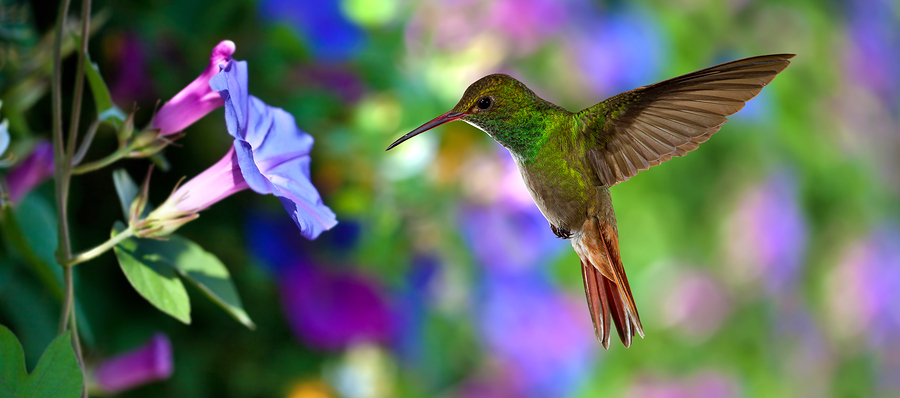
 

Creating a Hummingbird Habitat in Your Backyard

Hummingbirds are beautiful and fascinating creatures. With their bright colors, quickness in flight and amazing acrobatic abilities, these tiny birds are often viewed as resplendent jewels and a welcome addition to any garden. 


Florida Hummingbirds

In Florida, there is only one species of hummingbird native to the state, the Ruby-Throated Hummingbird, and most others only appear accidentally as they migrate south for the winter. The appearance of hummingbirds has decreased in recent years, at least in part due to their natural habitat diminishing thanks to urban growth and land development. This can make attracting hummingbirds to a garden quite difficult, and some might even consider it an art form. 

Providing Nectar to Attract Hummingbirds

Hummingbirds have a fast metabolism and their flight patterns and habits require the use of a lot of energy. They need a constant supply of food, so one of the primary ways in which gardeners are successful in attracting them is by providing nectar. The hummingbirds gravitates toward a garden filled with vibrant red and orange colored flowers. The best flowers for attracting hummingbirds often have tubular or trumpet-shaped flowers and a long blooming season. The firebush, firecracker plant, coral honeysuckle, snapdragon and Mexican sunflower are excellent choices.  


A Continuous Blooming Season

Regardless of which varieties of flowers a homeowner selects for a backyard hummingbird garden, it is important to consider when the flowers will bloom. Ensure that nectar is available to the birds whenever they visit. A gardener who fails to do this will often discover that the birds have left the property and may not return. The most successful garden selection includes varieties of both annuals and perennials which have different growing periods. This will help to ensure steady blossoms from spring to fall and possibly even a year-round nectar source. 


How to Plan Out Your Backyard Hummingbird Garden

When planting a hummingbird garden, it is important to not only offer vibrant colors and tasty nectars, but to create a habitat that offers shade, shelter and security. A tiered garden created by incorporating dwarf trees, flowering bushes and herbs offers hummingbirds places to rest in flight, take shelter from predators and build their nests.
If a yard is small, an existing larger oak tree, trellis, shed, covered deck or other structure can be used to support hanging vines. Pots and window boxes also offer additional places to plant flowering varieties, creating the tiered effect that hummingbirds prefer. Whatever varieties a garden offers, it is always important to carefully consider the distance between plants to allow enough room for their growth and the flight patterns of visiting hummingbirds.

Encouraging Nesting 

For gardeners who hope to encourage visiting hummingbirds to nest in their yard, adding fuzzy plants often helps. The soft plant fibers of pussy willows, cinnamon ferns and catkin-bearing trees are a preferred material for nest lining for hummingbirds because of the soft and supple qualities that the blooms of these plants offer. Moss and lichen that grow naturally on trees should not be removed in a hummingbird garden, as they are important materials used to camouflage nests, eggs and baby birds. 


Cleanliness- An Essential Component

Hummingbirds are quite fastidious about their environment, and they prefer an area that is clean and well maintained. To attract them, gardens must be properly cared for. Prune bushes and shrubs regularly, remove dead leaves, never allow overgrowth and watch for the appearance of fungus or mold. Keep the garden properly watered using a mister which doubles as a bath for birds on the fly. 


Organic Gardening Practices

When maintaining a hummingbird habitat, it is important to remember that this species of bird is somewhat fragile, and they benefit greatly from organic gardening practices. The use of pesticides and insecticides near hummingbirds exposes them to potentially deadly toxins and eliminates an important part of their diet, the spiders and small insects that they feed on for protein. 
Simple organic solutions for controlling damaging pests in a garden include starting with healthy plants, controlling the saturation of soil, hosing off the leaves, hand picking aphids from bushes and pruning dead leaves and decaying plant life. It is also a good idea to research the soil in an area in advance of starting a garden to ensure proper pH levels and composition for the flowers being planted there. Use organic fertilizer or compost to supplement, as appropriate.
Hummingbirds are beautiful, exotic creatures that enhance gardens. They also play a vital role in supporting native plant life by acting as pollinators. Attracting them requires patience and persistence, but once a hummingbird finds your garden, they will often return frequently and provide immense enjoyment for the entire family. 
If you are searching for ideas for your own hummingbird backyard oasis or simply want to visit these beautiful birds and enjoy watching them in flight, we welcome you to view our botanical collection at Flamingo Gardens. Our seasonal visitors include several different species of hummingbirds including the majestic Ruby Throat Hummingbird. 
Our gardens include over 3,000 species of beautiful wildflowers, flowering plants, trees and bushes in a serene setting, perfect for the entire family to enjoy. Spend a day with us to learn more about the hummingbird and many of Florida’s other amazing native wildlife and plant life. You are certain to gain a new appreciation for these amazing creatures and leave feeling inspired to create your own hummingbird backyard habitat. 


About the Author

Jonathan Leger is a sponsored member of the Garden Writer’s Association and a gardening enthusiast. He runs a small site dedicated to the history, education and care of a variety of roses at http://cabbageroses.net

Flamingo Gardens a Spectacular Setting with an Eventful Past

Flamingo Gardens is certainly a beautiful place to visit, but do you know how it came to be? 


The short answer is that Floyd L. and Jane Wray bought 320 acres in the Everglades for just under $5 an acre in 1927, incorporated as Flamingo Groves, and planted 40 acres of citrus orchard. In 1969, upon Jane Wray’s death, 60 acres of the property was preserved and became Flamingo Gardens.

That is just the beginning of a fascinating history.  


There are so many questions that arise, and each leads to more. Answering those questions, and filling in the details, is the really interesting part of the story. 

It all begins 10,000 to 14,000 years ago, Paleo-indians lived here in South Florida, probably with mammoths and bison.  Cypress swamps and hardwood hammocks appeared about 5,000 years ago.  An archeological dig less than a mile west of Flamingo Gardens on Long Key shows civilization 3,000 years ago.  The Tequesta lived here in the southeast.  When the Spanish explorers came in 1510, they found Seminoles living and growing crops on this land.  As time went on, the Seminoles and Miccosukees agreed to move to areas that were set aside for preservation of the environment and to use as a safe haven in which to maintain their customs and traditions.

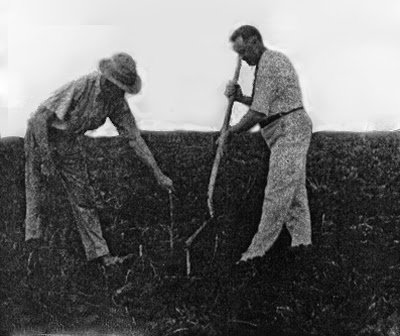
The Wrays were newcomers when they moved here from the Midwest.  They bought property in the Everglades from Frank and Mittie Chaplin and started a citrus grove.  It’s easy to see in that photo that there wasn’t much here when the first tree was planted on February 22, 1927.  Jane said, “There was no road within four miles.  Roads had to be built, ditches dug, drainage provided.  There was no water, electricity, telephones.  The only toilets were outdoors.  There was no Road 84.  What a thrill to sink our first plow; to plant our first tree!”  That first year, they planted 40 acres of summer oranges.

In 1928, Wray began planting the botanical garden with exotic plants and seeds provided by the government “so that our guests might realize the beauties of this tropical section of South Florida and to further emphasize the wonderful climate.”

Construction began on Flamingo Road in 1929.  By the early 1930s, there were oranges to sell and ship.  As the first elected Chairman of Port Everglades, Wray acquired federal funds to widen the entrance and deepen the basin at the port to allow large freighters and cruise ships to dock at Fort Lauderdale instead of Miami for the first time, and allow convenient shipping of fruit to the north.
Floyd and Jane lived in Hollywood, but they needed a place on the grounds for business and entertaining.  Wray Home was erected in 1933, beautifully situated on one of the high points of the majestic oak hammock.
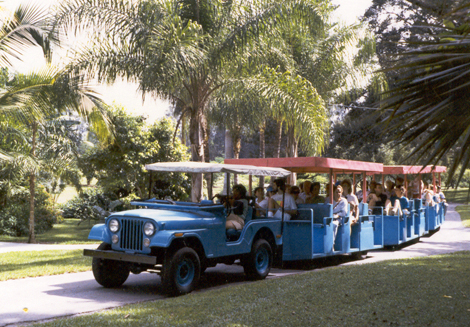
The gardens at Flamingo Groves were open to visitors 12 months a year.  An early newspaper ad read, “A Cordial Invitation is Extended to Guests and Citizens of Fort Lauderdale to visit Flamingo Groves, Southern Florida’s Newest and Largest Orange Grove Development.”  There was a small sightseeing tram ride with a talk about citrus, the groves, and the Everglades, a pond with 12 flamingos, free-roaming peafowl, the prized botanical collection, and of course, a fruit stand.
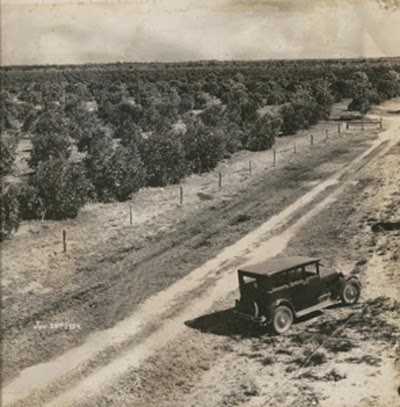
Citrus IndustryDue to the increase of groves in the whole area, Wray built the first modern citrus packing and shipping plant on Federal Highway in 1934.  (The photo to the left shows the groves that year.)  By 1939, Wray’s original 40-acre grove had grown to more than 200 acres.  The Flamingo Groves Catalog of 1951 listed 83 different varieties of citrus for sale.  At its peak, Flamingo Groves eventually covered over 2,000 acres (about 3 square miles).
Mr. Wray passed away in 1959; Mrs. Wray in 1969.  Her will endowed the Floyd L. Wray Memorial Foundation to honor her husband and preserve 60-acres, including the beautiful botanical gardens, to share with the public.  It’s greater purpose was to teach awareness of the beauty and bounty of the Everglades.  
Today Flamingo Gardens is an enduring gift from the Wrays, and a living museum of Florida’s past, a refuge to endangered and injured wildlife, as well as a haven for native and migrating species.  Schoolchildren of all ages arrive daily during the week on field trips, and guests visit from around the world to enjoy the legacy left them by the Wrays and to learn more about the Everglades, environment, animals and history of the area.  

As the end of the year approaches, please keep in mind that donations to help Flamingo Gardens maintain that legacy are tax-deductible.  And, visit the website flamingogardens.org for more general information. 
There’s so much more to the story, with so many interesting details and tidbits to share as the saga unfolds, so be sure to check back for next month’s blog.
By the way, if you have old photos of Flamingo Gardens or Flamingo Groves in digital form to share, please email them to [email protected] along with the dates and your recollections.  Call the Flamingo Gardens at 954-473-2955 if you have photos that you can bring to be scanned.  We would love to add them to our archives.   

Better Butterfly Basking

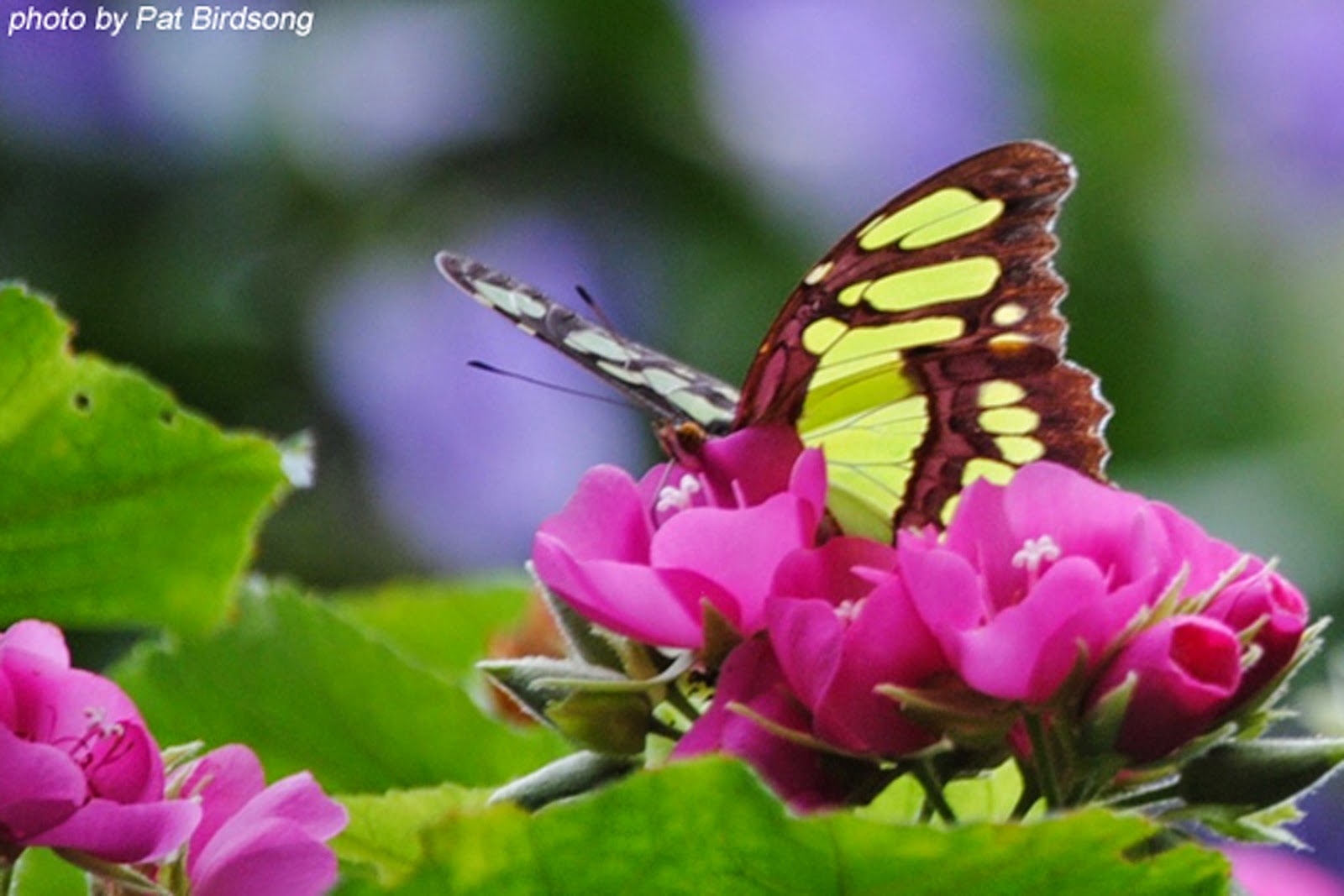
Photo by: Pat Birdsong

On a family trip to Flamingo Gardens, my toddler was absolutely delighted by their butterflies. They have a spectacular array of species fluttering around. Pat Birdsong, Volunteer Coordinator, beautifully captured this malachite on the Seminole dombeya, also referred to as the Florida hydrangea or tropical rose hydrangea.

Gardening has been a long time hobby of mine. As a young girl, my older sister and I would grow veggies and flowers in our backyard. My dream has always been to one day do the same with my own children. Now that my daughter really enjoys the outdoors, it couldn’t be a better time to start a vegetable and butterfly garden. Ultimately, we would be cooking and eating healthier (another one of my hobbies, making Paleo recipe’s), be more active, and maybe even enjoy a few butterfly sitings.

How can you attract butterflies?

Nectar-producing flowering plants provide food for butterflies. Host plants provide leaves for laying eggs, camouflage, shelter, reproduction, and larvae food. Seems only right to include both and help mother nature along.

The hydrangea supply the ever desired nectar enjoyed by butterflies and bees. Luckily, I have already planted a few in my front lawn (without even knowing!). I wouldn’t recommend placing them near an entry way or seating area as they attract many other buzzing insects. 


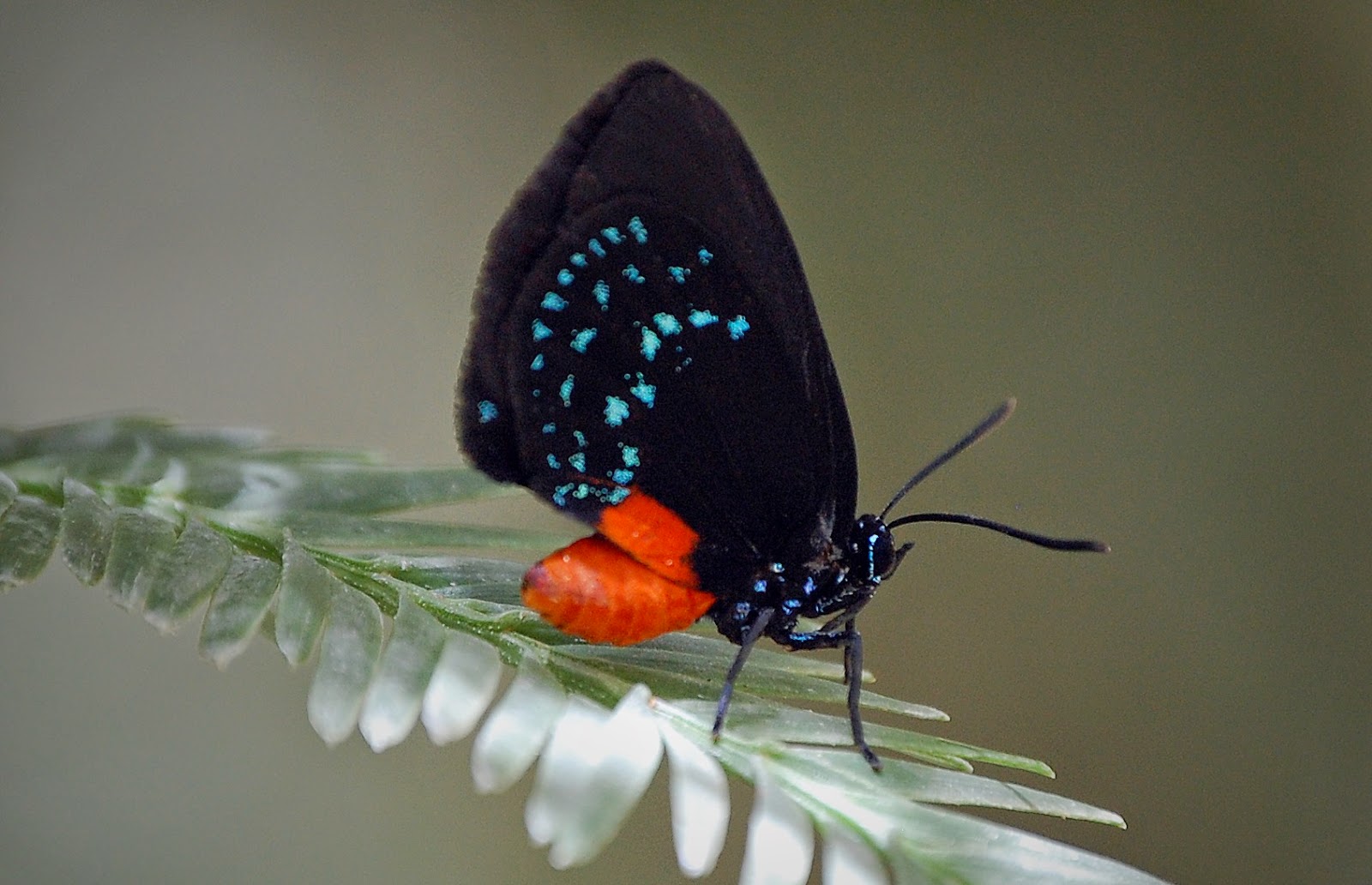
Once thought to be extinct the eumaeus atala depend on the coontie to survive.  They can be spotted in Flamingo Gardens on these host plants. They lay their eggs, and once hatched, the caterpillar eat large amounts of the leaves.

My latest gardening attempts were reserved to small containers on a balcony (since I lived on a second floor apartment). Before you knew it, with just a few flowers and herbs, butterflies were visiting. I once found a caterpillar feasting on my herbs! Somehow, I had unintentionally attracted these beautiful creatures, a pleasant surprise indeed.

Do you want to share your edible leafy greens with these creepy crawlers?

Butterflies can sometimes wander away from flowers, and caterpillars may find their way into your edible garden. First, I’d be sure to place your butterfly garden as far from your vegetable garden as possible. If you do find a caterpillar away from it’s home, you can hand pick and place it back on a host plant. After all, it’s a small price to pay and very few species are considered serious garden pests.

Actually certain butterflies are finding it increasingly difficult to find their habitat. The Monarch Joint Venture, encourages gardeners to create a habitat for the monarchs and their caterpillars. They were first listed as an endangered species in 1983. In 2010, the World Wildlife Fund included the monarch in the “Top 10 To Watch” list of species that needed to still be closely monitored and protected for their survival. Even a small home garden can make a difference.

 Photo by: Pat Birdsong

This monarch caterpillar is feeding on the milkweed plant. It is a necessity for their survival as they eat large amounts of the leaves. Planting milkweed in your garden will not only attract the monarch but help them thrive.

Fall is an agreeable time to get outdoors and start planting in South Florida. I hope you have been inspired to do so as well. Let’s enjoy nature, every bit of it. From the birds and the bees, to the butterflies and even the creepy crawlers.

Here is a helpful site that will get any butterfly garden in Florida on it’s way. Complete with butterfly species and larval food preferences.

Next…

With the help of my husband and one friendly neighbor, we built two, 8ft. x 4ft. raised garden beds to start my edible home garden. I placed them near the kitchen window so I can see what’s ripe for the pickin’ while I’m preparing a meal.