Pollinators are one of the wildlife populations most impacted by climate change, pesticide use, and habitat loss. Bees, hummingbirds, bats, and butterflies are all facing unprecedented threats as they struggle to adapt and survive the changing rhythms of weather and the seasons and changes to their natural landscape. After opening the new Butterfly Conservatory at Flamingo Gardens earlier this year, we’ve been flooded with questions regarding which plants are best to attract butterflies. Before we answer that question, it is important to understand the difference between butterfly nectar source plants and butterfly host plants.
Nectar source plants attract adult butterflies by supplying nectar (sugar-rich liquid). These plants vary in size, fragrance, and shape of the flower. All nectar source plants have nectar that is sipped by the butterfly, but the plant is not eaten by them. Most butterflies are attracted to almost all nectar plants, but it is specific butterfly host plants that are truly important for their survival.
Host plants (or larval plants) are plants that the butterfly larvae will eat. Butterfly species lay their eggs on or near the specific host plants that their caterpillar larvae will eat. Each species has a very narrow range of host plants that supply the necessary chemicals required for proper nourishment and growth of the caterpillars. Without enough of these critical host plants, caterpillar larvae will starve and die, threatening the very existence of butterfly species populations.
Here are the necessary host plants needed to attract some of the more desired Broward County native butterflies to your garden:
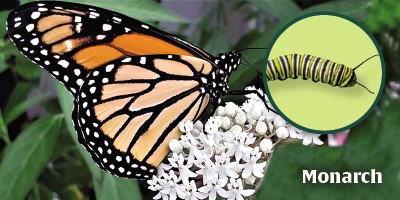
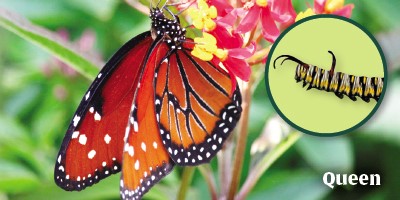
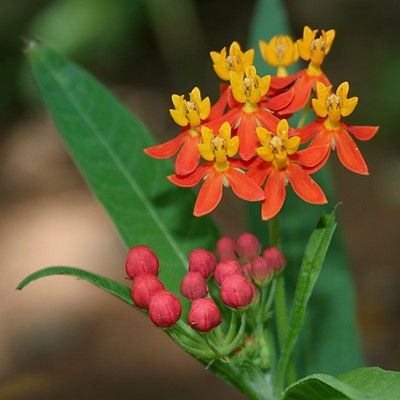
Host Plants for Monarch and Queen Butterfly
(and Soldier Butterfly, not shown)
Giant Milkweed (Calotropis gigantea)
White Twinevine (Funastrum clausum)
Tropical Milkweed (Asclepias curassavica)
Swamp Milkweed (Asclepias perennis)
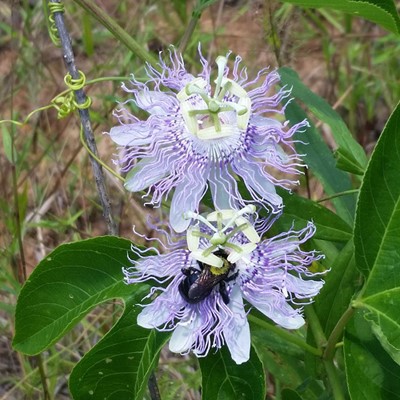
Host Plants for Zebra Longwing, Julia, and Gulf Fritillary Butterfly
Corkystem Passionflower (Passiflora suberosa)
Purple Passionflower (Passiflora incarnata)
Lady Margaret Passionflower (Passiflora Lady Margaret)
Host Plants for Orange-barred Sulphur
(and Cloudless Sulfur Butterfly, not shown)
Popcorn Cassia (Senna didymobotrya)
Bahama Cassia (Senna mexicana chapmanii)
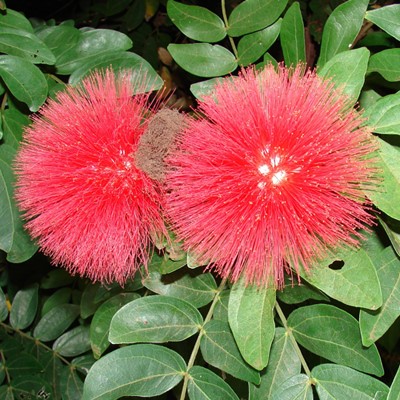
Host Plant for Statira Sulphur Butterfly
Red Powderpuff (Calliandra haematocephala)
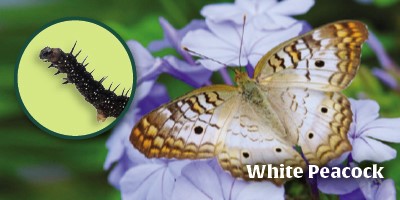
Host Plant for White Peacock
(and the Phaon Crescent and Common Buckeye Butterfly, not shown)
Frog Fruit, (Phyla nodiflora)
Host Plant for Atala Butterfly
Coontie (Zamia integrifolia)
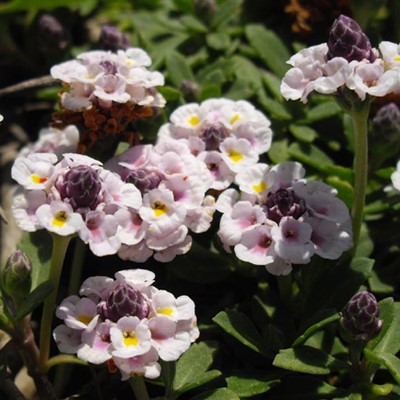
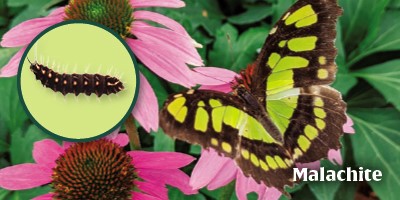
Host Plant for Malachite Butterfly
Carolina wild petunia (Ruellia caroliniensis)
Host Plants for Giant Swallowtail Butterfly
Wild Lime (Zanthoxylum fagara) or any citrus or lime plant
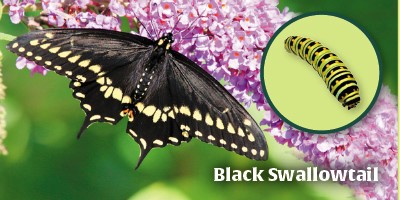
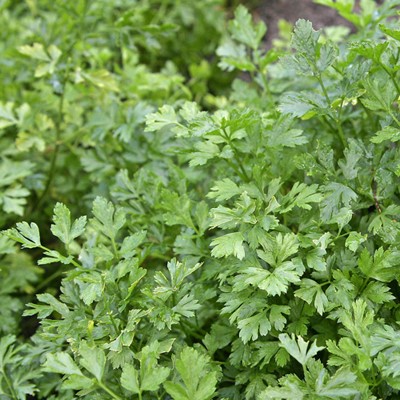
Host Plants for Black Swallowtail Butterfly
Parsley (Petroselinum crispum) or dill or fennell
A cautionary warning- caterpillars will devour the host plants! You’ll want to provide several of each species of host plant you select so there is plenty of food for the caterpillars to eat. You don’t want the caterpillars to run out of food midway through their growth cycle. Most gardeners don’t like the look of caterpillar-ravaged host plants in their gardens, so plant the host plants interspersed among nectar plants to hide the half-eaten leaves.
Butterfly conservation organizations agree that we can help our native butterfly populations become more resilient by providing the proper host or larval plants in our landscape. With just a little effort and the proper host plants, you can attract these Broward County native butterflies to your yard and help them survive! If you wish to learn more about Florida butterflies and establishing a butterfly garden, the University of Florida has excellent information on Butterfly Gardening in Florida at: http://edis.ifas.ufl.edu/pdffiles/UW/UW05700.pdf
Note: The plants listed in this article can be difficult to find. We recommend looking at nurseries that specialize in Florida native plants and/or butterfly plants. Flamingo Gardens is now propagating these plants in our nursery, but the caterpillars are eating them quicker than we can propagate, so at present we do not have extra host plants to sell. We hope to in the future. Meanwhile we hope this information has been helpful.
The city of Punta Gorda suffered widespread losses as a result of Hurricane Ian in Fall of 2022. Peace River Botanical and Sculpture Gardens fell within hurricane Ian’s path resulting in major environmental impacts such as the destruction of their trees and plants.
The Flamingo Gardens’ Eco-teers traveled to Peace River with over 500 native trees as well as host and nectar plants to help restore some ground on March 25th. Volunteers spent their day planting cypress, elderberry, coral bean, magnolia, lantana, and coontie.
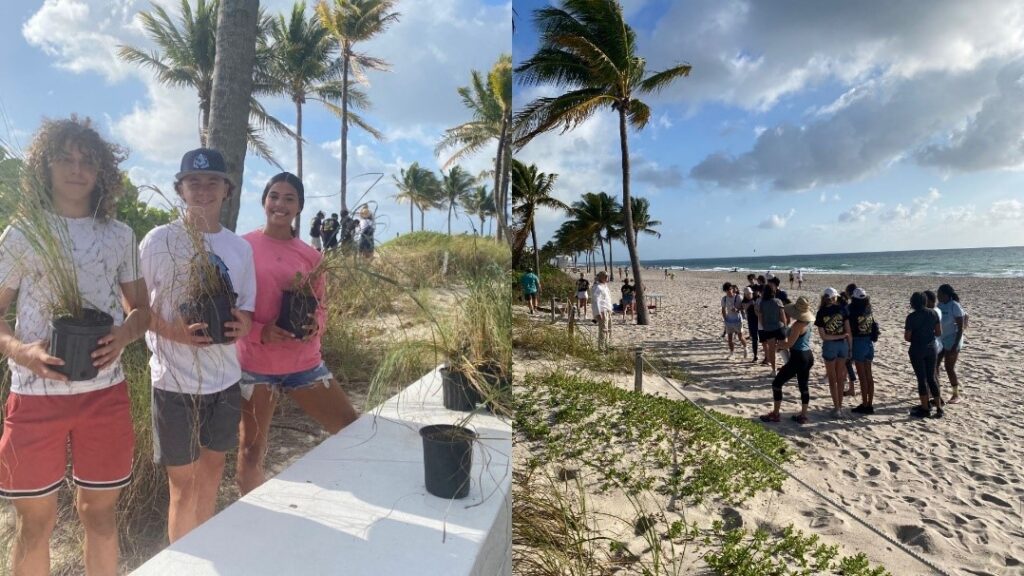
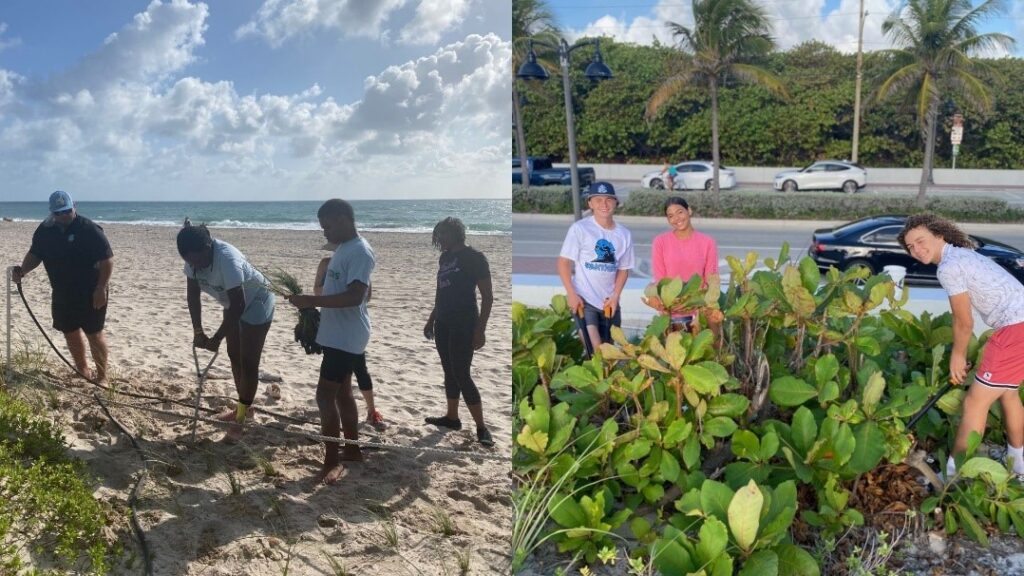
Within the same week, Eco-teers took their talents to Fort Lauderdale Beach in partnership with the Youth Environmental Alliance on April 1st. Their mission was to plant 4000 sea oats in an effort to restore our sand dunes and they succeeded.
Sand dunes provide natural coastal protection against storm surge, reducing coastal flooding and structural damage. Sand dunes also provide rich habitat for specific vegetation and wildlife. The sea oats are a Hardy and salt tolerant plant that play a major role in building and stabilizing the dunes. They help trap wind-blown sand which helps in maintain the form of the dunes and they have an extensive root system that grows horizontally and acts as the main support to keep the dune raised.
If you would like to join the next Eco-teer project, contact Glennys Navarrete at [email protected] for an application.
Without bees, many of the food crops in the United States would not even exist! In the US alone, honey bees are responsible for the pollination of $15 billion worth of crop . Pollination is a critical process in plants, allowing for the reproduction of plants, resulting in the next generation of crops. Plants are a critical part of our food chain and a source of food for all herbivores. Plants are also responsible for the purification of the atmosphere as they take in carbon dioxide and convert it to oxygen. Therefore, bees are indirectly responsible for our ability to eat and breath!
Bee populations are declining at alarming rates in recent years. The Smithsonian Magazine reports that bee populations declined just five to ten percent annually in the 1980s, but recent years have seen annual declines from 22 to 30 percent. Populations are declining due to a variety of factors including habitat destruction, pesticides, disease, and a changing climate.
Habitat Loss
Studies indicate that bee territories have shrunk by nearly 200 miles in North America and Europe primarily due to human encroachment as more land is developed for housing, commerce, and agriculture. Consequently, the habitat ranges for the honeybees have become smaller and they are challenged as to where they should set their hives. Unlike other insects like butterflies that easily adapt to new habitat ranges, some bee species like bumblebees rarely shift their habitat. Thus, habitat loss may eventually result in the extinction of some species of bees.
Increased habitat loss has led to native bees experiencing a significantly greater threat to extinction than ever before. Of the nearly 30,000 species of bees across the world, most native bee species are dependent upon a particular plant species for survival. The destruction of the bees’ particular habitat is a near certain death sentence for many bee species that are not suited to migration. Examples of the most threatened native bee species include yellow carpet solitary bee, sunflower leaf-cutting bee, wild sweet potato bee, and Gulf Coast solitary bee.
Diseases
Bees are particularly vulnerable to some species of gut and mite parasites that thrive in warm temperatures. One of the glaring effects of climate change is the increase in temperatures and shorter cold seasons. These high temperatures mean that bees are at greater risk of diseases and parasites now than they were before due to climate change.
Seasonal Timing
In their role as pollinators, timing is crucial for bees. The time of spring flowering and the hatching of bee larvae must coincide for successful pollination to take place. Usually, bees come out of winter hibernation at exactly the same time when flowers begin to bloom. Warmer temperatures in recent years have resulted in earlier snow melts and earlier bloom periods that occur before the bees start to emerge. If the flowers are available and there are no bees around to pollinate them, a mismatch occurs. This loss of synchronicity between bees and the flowering plants results in a decrease in seed production and plant reproduction, resulting in a food shortage for the bee population.
Three Ways To Help Bees:
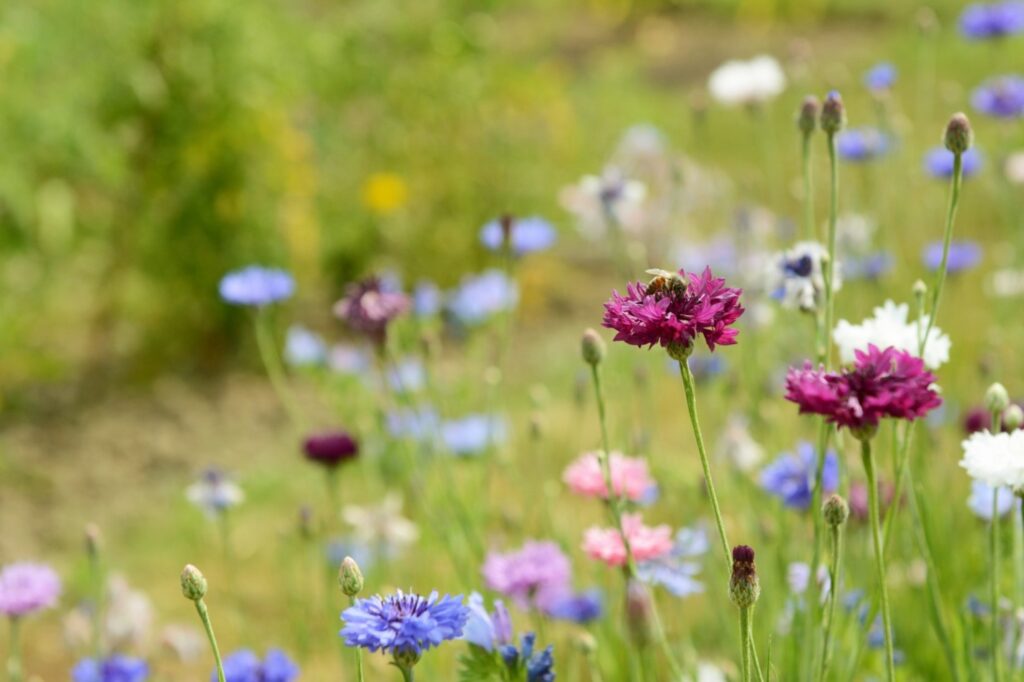
Plant a Bee Garden. Create a habitat for bees with plants that are rich in pollen and nectar. Bees are drawn to single flowers with one ring of petals where the central part of the flower is easily accessible. You don’t need a ton of space to grow bee-friendly plants — gardens can be established across yards and in window boxes, flowerpots, and planters.
Go Chemical-Free for Bees. Bees are insects so synthetic pesticides, fertilizers, herbicides, and neonicotinoids are harmful to bees, wreaking havoc on their sensitive systems. Avoid treating your garden and green spaces with synthetics. Instead, use organic products and natural solutions such as compost to aid soil health and add beneficial insects that keep pests away, such as ladybugs and praying mantises.
Plant a tree. When a tree blooms, it provides hundreds and thousands of blossoms from which bees can feed. In fact, bees get most of their nectar from trees! Trees are not only a great food source for bees, but are also an essential habitat. Tree leaves and resin provide nesting material for bees, while natural wood cavities make excellent shelters.
With only a few days into the month of March, the Eco-teers have already dedicated much of their time in restoring our coastal habitats and spreading climate change awareness.
1000 sea oats were planted at Fort Lauderdale Beach in partnership with the Youth Environmental Alliance (YEA) in an effort to restore coastal sand dunes in South Florida. Sand dunes provide habitat for several coastal species and protection from storms. Not even the blazing heat could have stopped Ezequiel, Lori, Rami, Han, Sohail, Kevin, Christopher, Laurent, Madison and Faith from getting the job done.
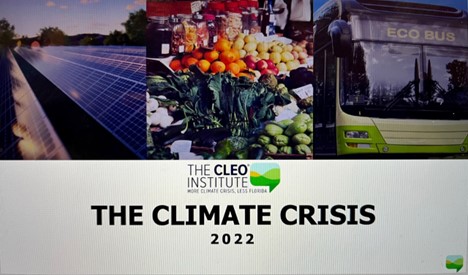
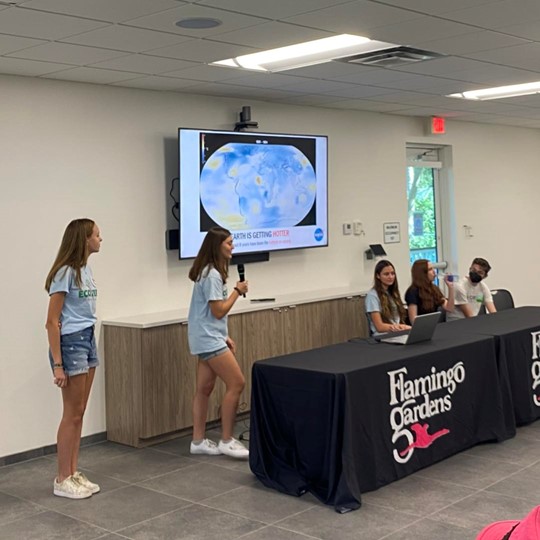
In downtown Fort Lauderdale, some of the Eco-teers spent their day at the Science Festival hosted by the Museum of Discovery and Science. Tiffany and Tori provided a climate presentation discussing the latest climate science, impacts and solutions as part of their climate training provided by the CLEO Institute.
The science festival also allowed students to compete in the build a better world challenge. The challenge allowed students to design solutions in cutting waste and boosting efficiency in the fight against climate change. Ines, Giuliana and Karen participated in the challenge and won first prize for their project on harvesting rainwater to reduce carbon emissions released from local water treatment plants.
Way To Go Eco-Teers!
Join in on the next projector to become a member please email:
On February 10th, The Eco-teers participated in the fifth annual Broward County Public Schools Youth Climate Summit as a climate sponsor for the event. Hundreds of Broward County students gathered at Pompano Beach High School to discuss the solutions they can implement in their community.
Karen Hendriks, Ines Rosales, and Giuliana Mudryj shared their experience as Eco-teers and encouraged students to join them at Flamingo gardens to make environmental change. Along with their optimistic perspectives, they brought along some popular pollinators such as the Monarch and Zebra Longwing butterfly to highlight the importance of the role they have and how climate change severely increases biodiversity loss.
On February 4th, the Eco-teers visited Charnow Park in Hollywood Beach, Florida. The focus of their work on dune restorations was a huge success! 3000 sea oats were planted in partnership with the Youth Environmental Alliance. The morning brought in tremendous amount of rain, but that did not stop the amazing volunteers from serving their community.
Sand dunes play an important role in our Florida beaches, providing habitat for several coastal species and protection from storms. The dunes are a naturally-occurring accumulation of wind-blown sand. As they grow they are colonized by plants such as sea oats, sand spurs and beach morning glory, to name a few.
The Eco-teers planted sea oats due to Its massive root system which is capable of holding soil and sand in place during extreme weather events such as hurricanes and tropical storms. This plant’s habitat puts it at the forefront of shoreline protection.
Acting as a wall, sand dunes help protect beaches and property from damage from high winds, storm surges, waves and tides. The dunes are the first line of defense for homes and businesses. it’s important to avoid walking on them as foot traffic in dunes tramples vegetation and causes erosion over time.
If you would like to make meaningful and impactful change in your community, please email the Eco-teer Coordinator, Glennys Navarrete, at [email protected] for an application and updates on the upcoming projects.
Last month, Flamingo Garden’s Eco-teer Ines Rosales discussed Climate Change Impacts affecting the world and Florida specifically in Part 2 of the “Climate Change 101” as presented by the Eco-teers as part of their November 2022 Climate Fair. This month Eco-teer Karen Hendriks discusses how climate change impacts underserved communities disproportionately.
The climate crisis impacts the most vulnerable living in our community the hardest. Population growth increases resource demand and competition for food and water, which is disproportionately felt in developing countries. A Harvard Study predicts that by 2030, nine out of ten of the major crops in the world will experience reduced or stagnant rates, at least in part due to climate change, while average prices will increase dramatically as a result. Our most vulnerable communities will be least able to afford the increased prices.
People depend on nature to provide food and fresh water, regulate climate, prevent floods and disease. Climate change can fundamentally transform current ecosystems and food webs with possible consequences ranging from increased pest and disease outbreaks, reduced productivity in fisheries, and decreasing agricultural yields.
80% of ecological processes that form the foundation for life on Earth are already impacted. We are experiencing the worst wave of species die-offs in 65 million years with 1 MILLION species at risk of extinction within decades. Marginalized communities, notably in developing countries, are most at risk from the loss of biodiversity since they often rely directly on ecosystem goods and services.
The impacts of climate change include warming temperatures, changes in precipitation, increases in the frequency or intensity of some extreme weather events, and rising sea levels. These impacts threaten our health by affecting the food we eat, the water we drink, the air we breathe, and the weather we experience.
Extreme heat is the deadliest natural disaster in the United States, killing more people on average (about 600 per year) than hurricanes, lightning, tornadoes, earthquakes, and floods combined. By 2050 in South Florida, we can expect to live almost half of the year in what is considered “danger days” where it will be dangerous to work or play outside. Spencer Glendon, a senior fellow at the Woods Hole Research Center, which does climate science research, thinks most of Florida will be in the danger zone — defined as spells above 96 degrees when relative humidity is above 40% — 3 months of the year by 2040. According to Glendon, Disney World will be closed for long periods of time “because it won’t be safe to take children there, and it certainly won’t be safe to be in a fuzzy suit.”
Extreme heat from climate change affects marginalized communities disproportionately. The US Department of Housing and Urban Development does not require A/C units in affordable public housing, and tenants cannot afford to purchase AC on their own. Likewise, the poor are less likely to afford the higher utility bills. People who rely on public transportation, walking, and biking are also more prone to be exposed to extreme heat.
To put it simply, not everyone experiences climate change the same. People who experience oppression are less likely to have general protections in our society. The largest polluters on the planet are also those who suffer the least from the dangers of climate change.
People who experience oppression because of race, income, gender identity, sexual orientation, disability, age, etc. are less likely to have general protections in our society, and even less likely to have access to resources to adapt to our changing climate or pass policies and legislation that are fair and culturally significant. Disenfranchised communities are on the frontlines of the climate crisis because they experience impacts first and worst.
To fully understand the impacts of the climate crisis it’s important to understand that we don’t all live the same way. The reality is that as our temperatures continue to rise, and the climate crisis impacts get worse, our most vulnerable living in our community will get hit the hardest. The climate crisis is a humanitarian issue. Understanding the difference between equality, equity, and justice are key in becoming an advocate for climate policies.
About the Author: Karen Hendriks is a Senior at Cypress Bay Highschool and a volunteer member of Flamingo Gardens’ Eco-teers. Her blog Climate Change Impacts to Marginalized Communities is Part 3 of the “Climate Change 101” presentation by the Eco-teers as part of their November 2022 Climate Fair. Look for Part 4, Climate Change Mitigation and Adaption Solutions, to follow next month.
On Sunday, January 29, 2023, the Eco-teers volunteered at Tree Tops Park in Davie. The project focused on removing invasive plant species such as the snake plant.
Snake plants are just one of the many exotic plants that become invasive when planted outdoors in Florida. These plant species spread ferociously and can displace and prevent native plant growth. A healthy plant community has a variety of shrubs and trees, but invasive plants cause biological pollution thus reducing plant diversity.
When removing snake plants, always make sure to pull or dig out all the roots, which look like carrots, or the plant will re-establish itself.
The Eco-teers successfully filled twenty large trash bins of these invasive plants by shoveling out the roots from the ground while simultaneously pulling down any vines or clusters attached.
Would you like to participate in the next project?
If you would like to make an environmental impact in your community, contact [email protected] to join the Eco-teers!
On December 17th, the Eco-teers worked on a dune restoration in Fort Lauderdale Beach alongside the Youth Environmental Alliance (YEA). 1004 sea oats were planted on the beach located just half a block North of Sunrise and A1A.
Sand dunes provide natural coastal protection against storm surge, reducing coastal flooding and structural damage. Sand dunes also provided rich habitat for specific vegetation and wildlife.
The sea oats are a Hardy and salt tolerant plant that play a major role in building and stabilizing the dunes. They help trap wind-blown sand which helps in maintain the form of the dunes and they have an extensive root system that grows horizontally and acts as the main support to keep the dune raised.
Although many signs were present alerting visitors to not walk over the dune, there was visible destruction of the dunes due to walking trails created by visitors. To help maintain our dunes, avoid walking through these grassy dunes to prevent sand displacement and promote the success and growth of our natural coastal protection.
If you would like to join in the next dune restoration, contact Glennys Navarrete at [email protected]
On Sunday, November 13, 2022, the Eco-teers presented their first Climate Fair in the courtyard of Flamingo Gardens from 10am to 4pm.
The Eco-teers and other community partners presented the fair to educate the public on the impacts of climate change and ways they can make a difference. Guests could visit booths and have their “climate passport” stamped for discounted admission to Flamingo gardens for the day.
The Eco-teers presented a special “Climate 101” presentation in the Mary N. Porter Learning Center at 11:30 in partnership with the CLEO Institute, describing the effects of fossil fuels on the planet and the resulting effects of global warming.
Thanks to all our community partners: Right to Clean Water, MODS, Activities with Alexa, SeaTurtle OP, Cotton Talk, the CLEO institute, and MangroLife.
Would you like to participate in the next project? Email [email protected] to apply!